Workforce deployment basics for project-based operations
Insights
Manpower20 MAY 2026 · 8 min read

Workforce deployment basics for project-based operations

In major infrastructure, energy, and commercial projects in Libya, mobilizing the right talent at the right time is often the defining factor in project success. Workforce deployment in an emerging market requires more than just recruitment; it demands a strategic alignment of local labor laws, logistical planning, and welfare management. For international operators entering the Libyan market, understanding the local manpower landscape is a critical prerequisite to execution. Arkan Group provides this detailed guide to help international companies navigate the complexities of staffing their project-based operations effectively, legally, and sustainably within Libya.

14%
Private Sector Workforce
7.46M
Population

Libya's Labor Market Reality: Why Staffing is the First Bottleneck

Libya possesses a young and growing population of approximately 7.46 million people. However, the structure of the labor market presents unique challenges for international companies. Currently, only about 14% of the workforce is employed in the private sector, with the vast majority absorbed by public institutions. This dynamic means that finding readily available, privately-trained talent can be the first major bottleneck for new project operations.

Understanding this reality is essential for realistic project planning. International firms cannot assume that a deep pool of specialized private-sector contractors is waiting on standby. Instead, proactive strategies must be developed to attract individuals from the public sector, upskill recent graduates, or import specialized foreign talent where local gaps exist. Companies must factor in longer lead times for sourcing specific technical skills, particularly in highly regulated sectors.

For more specific insights on sector demands, read our breakdown of oil and gas operating requirements, where technical manpower constraints are often most visible.

Identifying and Vetting Qualified Personnel

Effective recruitment in Libya goes beyond placing job advertisements; it requires a deep network and rigorous vetting processes. Relying solely on standard CVs can be misleading. Successful operators partner with local execution firms like Arkan Group to tap into established databases of pre-vetted professionals. We utilize a multi-tiered screening approach that verifies not just technical qualifications, but also reliability and site-readiness.

The Vetting Checklist

When identifying personnel, standardize the following checks:

  • Certification Verification: Ensure all technical certifications (e.g., welding, HSE, electrical) are internationally recognized and current.
  • Background and Clearance: Conduct necessary local security clearances required for accessing sensitive project sites.
  • Medical Fitness: Standardize pre-deployment medical exams, especially for remote or physically demanding roles.
  • Language Proficiency: Verify English or technical language skills to ensure safe and effective communication with international management teams.

By front-loading the vetting process, companies prevent costly mid-project staffing replacements and maintain operational continuity.

Visa, Work Permits, and Legal Compliance

Navigating the legal framework for both foreign and local workers is non-negotiable. Libya’s labor laws require specific quotas for local employment, and international companies must demonstrate compliance to maintain their operating licenses. Attempting to bypass these regulations can result in severe delays, fines, or project suspension.

For foreign nationals, the mobilization process requires securing business visas, which must subsequently be converted into residency and work permits. This bureaucratic process demands local expertise. Processing times can fluctuate based on governmental procedures and the applicant's nationality. It is imperative to initiate these workflows months in advance of the targeted mobilization date.

"Compliance is not a phase; it is an ongoing operational standard. Proper documentation is the foundation of site security and operational stability."

Locally, operators must register their workforce with the Ministry of Labor and ensure all social security (Solidarity Fund) contributions are calculated and paid correctly. Partnering with a local entity that handles payroll and compliance shields the international partner from administrative liabilities.

On-Site Management: Housing, Transport, and Welfare

Deploying a workforce to a project site—particularly in remote locations like the Sirte Basin or southern infrastructure zones—requires comprehensive life-support planning. A worker's performance is directly tied to their living conditions. On-site management encompasses secure housing, reliable daily transport, and overall welfare.

Essential Welfare Pillars

  • Secure Accommodation: Camps must meet international HSE standards, providing climate control, reliable power, and secure perimeters.
  • Catering and Nutrition: Providing high-quality, culturally appropriate meals is critical for morale and physical endurance on long shifts.
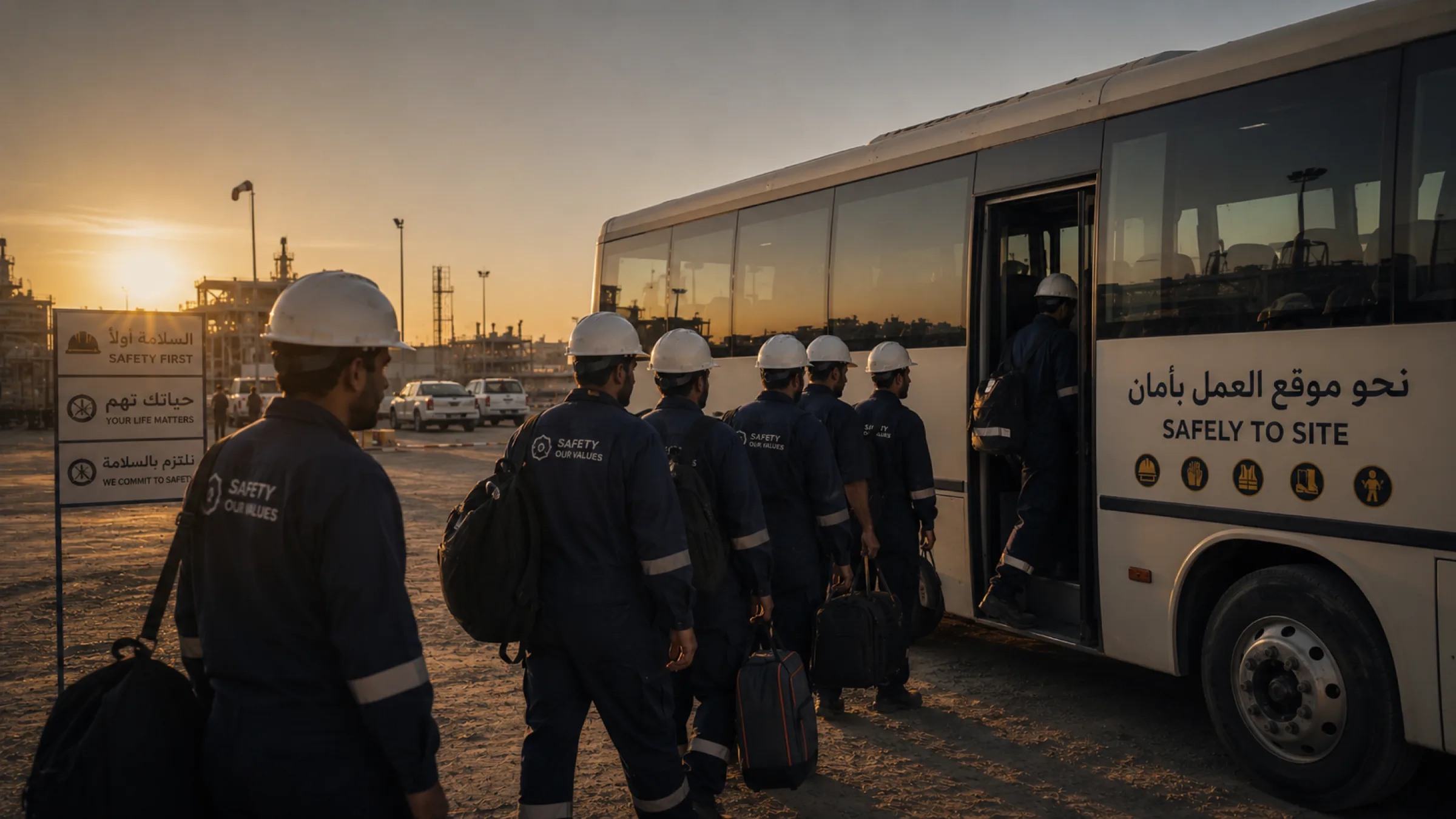
  • Transportation: Establish dedicated, secure transport routes between accommodations and the work site to ensure punctuality and safety.
  • Medical Facilities: Every site must have integrated first-aid and emergency medical evacuation plans in place.

Arkan Group specializes in delivering these turnkey life-support solutions, allowing our partners to focus strictly on their core engineering or operational mandates without being bogged down by camp management.

Scaling Workforce for Multi-Phase Projects

Large-scale operations are rarely static. A project may begin with a small team of engineers for the front-end engineering design (FEED) phase, scale up to hundreds of laborers during construction, and scale back down for commissioning and maintenance. Workforce deployment strategies must be highly elastic to accommodate these multi-phase lifecycles.

Elasticity requires agile contracting models. Operators should utilize a mix of core permanent staff and flexible, project-based contractors. This prevents bloated payrolls during downtime while ensuring immediate access to manpower during peak execution phases. Effective demobilization planning is just as important as mobilization to ensure smooth transitions and avoid labor disputes.

For institutions looking to permanently raise the skill level of their local workforce over a multi-year project, integrating structured training is highly recommended. Learn more about how this is achieved in our guide to education sector support models.

Sources

Turn this into a plan for your company.

Book a Libya Market Entry Call